Have you spotted a mysterious “CFD” line on a Litchfield Park tax bill or listing and wondered what it means for your budget? You are not alone. Many buyers first learn about Community Facilities Districts during a new-build tour or while reviewing disclosures. In this guide, you will learn what a CFD is, where to find the exact charge for a property, and how it affects your monthly payment and long-term plans. Let’s dive in.
CFD basics in Litchfield Park
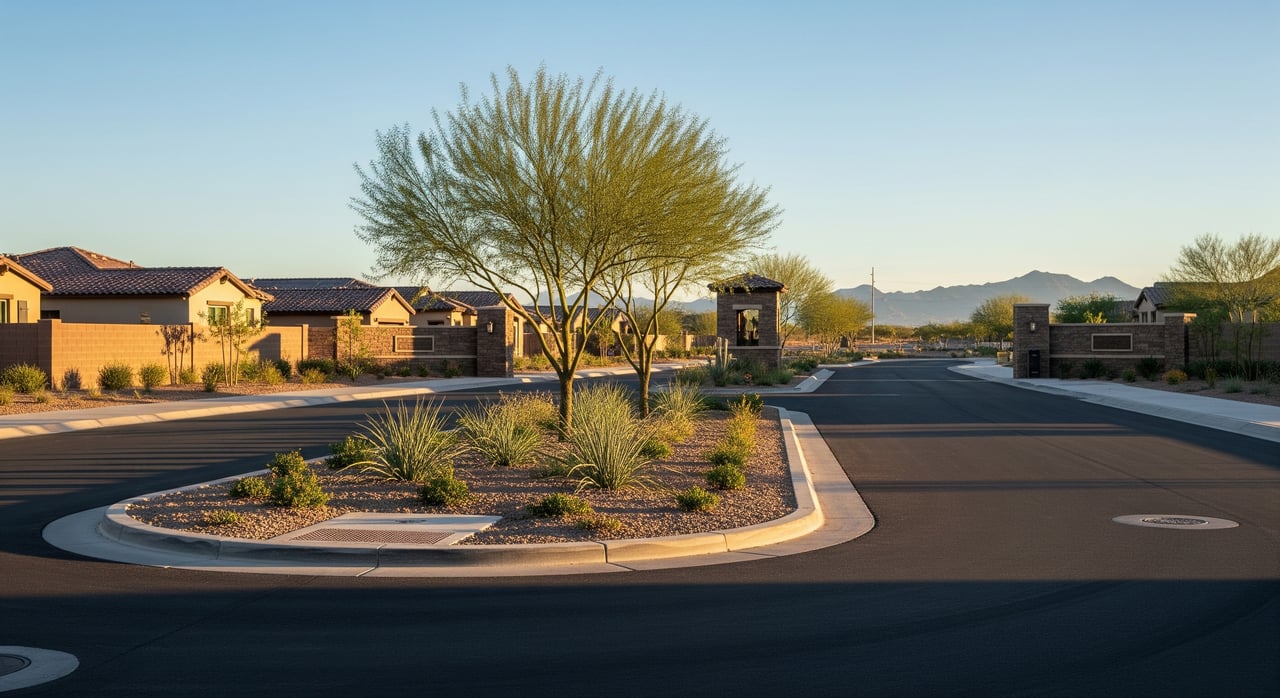
A Community Facilities District (CFD) is a public financing tool that helps fund infrastructure for new master-planned areas. The city forms a district, issues bonds, and property owners inside the CFD repay that debt over time through a special tax or assessment. These funds can cover roads, water and sewer lines, parks, landscaping, and similar improvements.
A CFD is separate from your regular property taxes and separate from HOA dues. It is a legally required charge tied to the parcel if the home sits inside the district boundaries. If you buy a home in a CFD, you should expect the assessment to continue until the associated obligations are met or retired.
How CFD charges are structured
CFDs can be set up in different ways. Some charge a fixed annual dollar amount per parcel. Others escalate at a set rate, or they may be tied to assessed value or another index. Certain districts allow prepayment when specific conditions are met, while others require payments until the bonds are paid off. The exact structure depends on the district’s formation documents.
Where CFDs appear on your records
You can confirm whether a Litchfield Park property is in a CFD by checking key documents and records. Start with the most recent Maricopa County property tax bill. The CFD may appear as its own line or under a section for special district assessments or secondary levies.
Your parcel’s online record with the county can also help. Parcel detail pages often include special district charges or a link to the full tax bill. If you are unsure about a line item, you can contact the Maricopa County Treasurer or Assessor for a plain-language explanation.
The preliminary title report is another important source. Title exceptions and special district disclosures commonly cite CFDs, bonds, or special assessments tied to the property. For new construction, the builder’s purchase documents typically include a public report or a special tax statement with the annual CFD amount per lot.
City records are useful too. The City of Litchfield Park keeps formation ordinances, boundary maps, and bond documents on file. These outline the term, rates, escalation, and any prepayment options.
What to look for in the paperwork
Scan for phrases like “Community Facilities District,” “CFD,” “Special Assessment,” “Special District Assessment,” “Special Tax,” or a district name that ends with “Community Facilities District.” Expect the charge to transfer to you at closing. The CFD obligation stays with the parcel unless it was prepaid.
How a CFD affects your budget
Mortgage lenders generally treat a CFD as a recurring housing cost. For qualifying, they convert the annual amount to a monthly figure and include it in your housing expense for the debt-to-income (DTI) ratio. Whether your lender escrows the CFD alongside taxes and insurance depends on the loan program and lender policy.
Because the CFD increases the monthly cost used in DTI, it can reduce your buying power compared to a similar home without a CFD. You may still qualify for your target price range, but it is smart to run the numbers both ways.
CFDs can also matter for resale and refinance. Some buyers compare the total cost of ownership and may prefer homes without ongoing special district taxes. That said, CFDs are common in newer master-planned communities, and the market impact varies by amount and buyer awareness. At refinance, your lender will consider the CFD in the same way they did at purchase.
CFD vs HOA dues
HOA dues fund community operations, maintenance, or amenities. A CFD funds public infrastructure and is a recorded special tax or assessment. Lenders typically treat both as recurring housing expenses for qualification.
Find your exact CFD charge
Use this step-by-step process to confirm the amount for any Litchfield Park property:
Get the latest property tax bill. Review the Maricopa County tax statement for line items labeled “CFD,” “Community Facilities District,” “Special Assessment,” or “Special District.”
Review the preliminary title report. Look for recorded special district liens or taxes in the exceptions.
Ask the listing agent or builder. Request the CFD disclosure or master special tax statement. New-home sales packets usually include the annual amount per lot.
Confirm with the county. Call the Maricopa County Treasurer or Assessor with the parcel number if any line item is unclear.
Check city formation documents. City of Litchfield Park records will show the term length, escalation, prepayment rights, and whether the charge is fixed or variable.
Talk to your lender. Confirm how the CFD will be handled in DTI and whether it will be escrowed.
Estimate the monthly impact
To translate an annual CFD assessment into a monthly figure for budgeting, use a simple conversion.
- Basic formula: Monthly CFD equivalent = Annual CFD assessment ÷ 12.
- If the CFD appears on the tax bill, your lender will still convert the annual amount to a monthly number for qualifying.
- If the district uses a variable or ad valorem method, ask the city or treasurer what you should expect annually.
Illustrative example
Here is a hypothetical example to show the math. If a CFD assessment shows $1,800 per year on the tax bill:
- Monthly CFD equivalent = $1,800 ÷ 12 = $150 per month.
- For DTI, the lender adds $150 to your monthly housing expense.
Use this method to compare homes. For example, a new build with a $150 monthly CFD might still be the better fit if the HOA or insurance is lower, while a newer resale without a CFD might offset the difference with slightly higher taxes. The key is to compare the total monthly obligation.
New build vs newer resale: compare total cost
When you shop in Litchfield Park, you may compare a brand-new home that carries a CFD to a slightly newer resale that does not. Both can be great options. The best way to decide is to compare the total monthly cost and not just the base price.
Add up: mortgage principal and interest, homeowner’s insurance, property taxes, HOA dues, and any CFD. This gives you a clear apples-to-apples comparison. Also review the CFD term and whether the district has any escalation so you understand how costs could change over time.
Buyer checklist
Use this practical checklist while you shop and before you close.
Before you sign a new-build contract
- Request the builder’s disclosure of any CFD affecting the subdivision and the exact annual pre-tax amount per lot.
- Review the CFD formation documents for term, escalation, and any prepayment rights.
- Ask whether the builder offers any temporary subsidy, rate buy-down, or CFD buyout program.
Before closing on any home
- Review the seller’s current tax bill and the preliminary title report for CFD line items, and confirm whether the charge will transfer.
- Ask your lender how they will treat the CFD in qualifying and whether escrow is required.
- Include the monthly CFD equivalent in your budget and approval strategy.
After you purchase
- Confirm how and where the CFD is billed and paid, and whether it will show on future tax bills or as a separate statement.
- If you plan to refinance or sell, review any available prepayment or defeasance options and how the CFD will be disclosed to future buyers.
Who to contact for specifics
- Maricopa County Treasurer for the current tax bill and line-item explanations.
- Maricopa County Assessor for parcel details and assessed value.
- City of Litchfield Park for the CFD formation ordinance, district map, and bond documents.
- Your title company or closing agent for the preliminary title report and recorded exceptions.
- The builder or developer for new-home disclosures and the special tax statement.
- Your mortgage lender for escrow rules and how the CFD will be treated in DTI and loan options.
We can help you run the numbers
You deserve a clear picture of costs before you choose between a new build and a newer resale. Our West Valley team works in Litchfield Park every day, and we pair buyer representation with in-house contractor expertise to help you compare total monthly costs, understand CFD terms, and plan for ownership with confidence. If you want a bilingual, hands-on team to review your tax bill, disclosures, and loan options, reach out to Imelda Reyes. We are ready to help you move forward.
FAQs
What is a Community Facilities District in Litchfield Park?
- A CFD is a public financing district that funds infrastructure for new communities, repaid by property owners in the district through a special tax or assessment.
Where do I find a CFD charge on a Maricopa County tax bill?
- Look for a separate line item labeled “CFD,” “Community Facilities District,” “Special Assessment,” or “Special District” on the most recent property tax bill.
How do lenders treat CFD assessments when I qualify for a mortgage?
- Lenders generally convert the annual CFD amount into a monthly figure and include it as a recurring housing expense in your debt-to-income ratio.
Can I prepay or remove a CFD on my Litchfield Park home?
- Some districts allow prepayment or bond defeasance, but it depends on the specific CFD’s formation and bond documents, so you need to verify for your parcel.
Are CFDs the same as HOA dues in Arizona neighborhoods?
- No, HOA dues fund community operations or amenities, while a CFD is a recorded special tax or assessment that funds public infrastructure in a defined district.
Will a CFD hurt my resale value when I sell?
- Market impact varies by the amount and buyer awareness; many buyers compare total cost of ownership, and CFDs are common in newer master-planned areas.