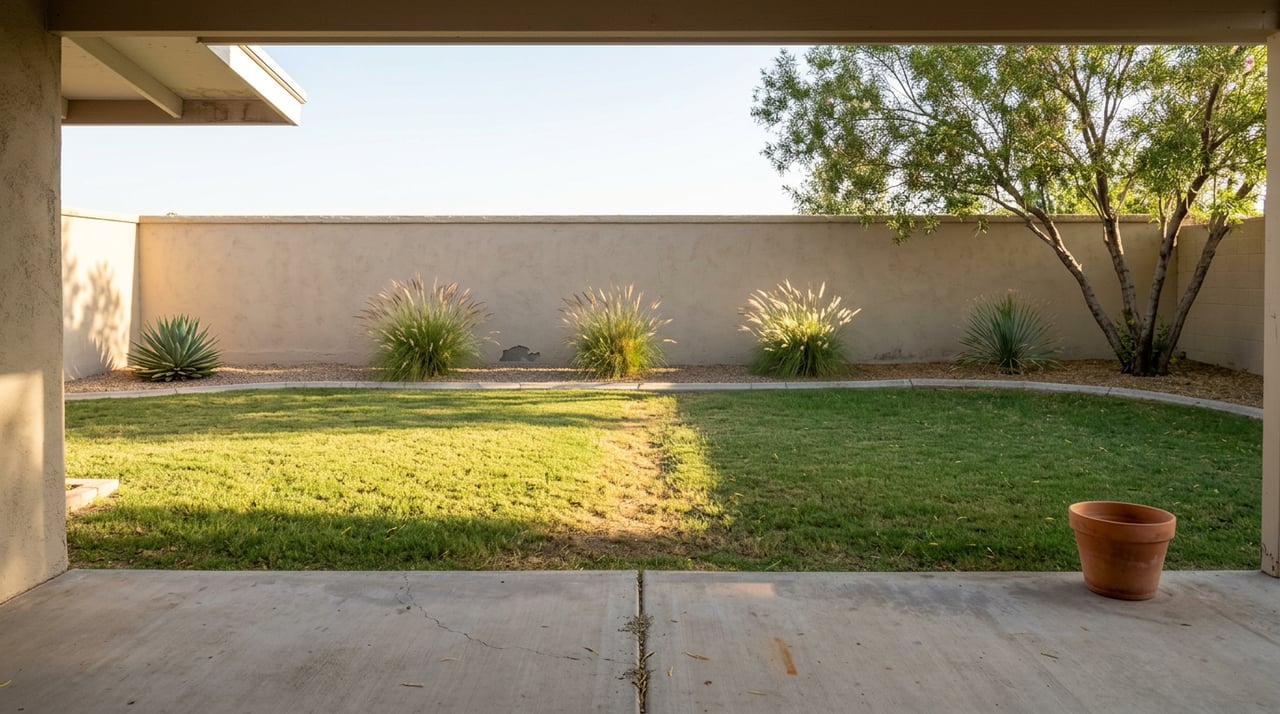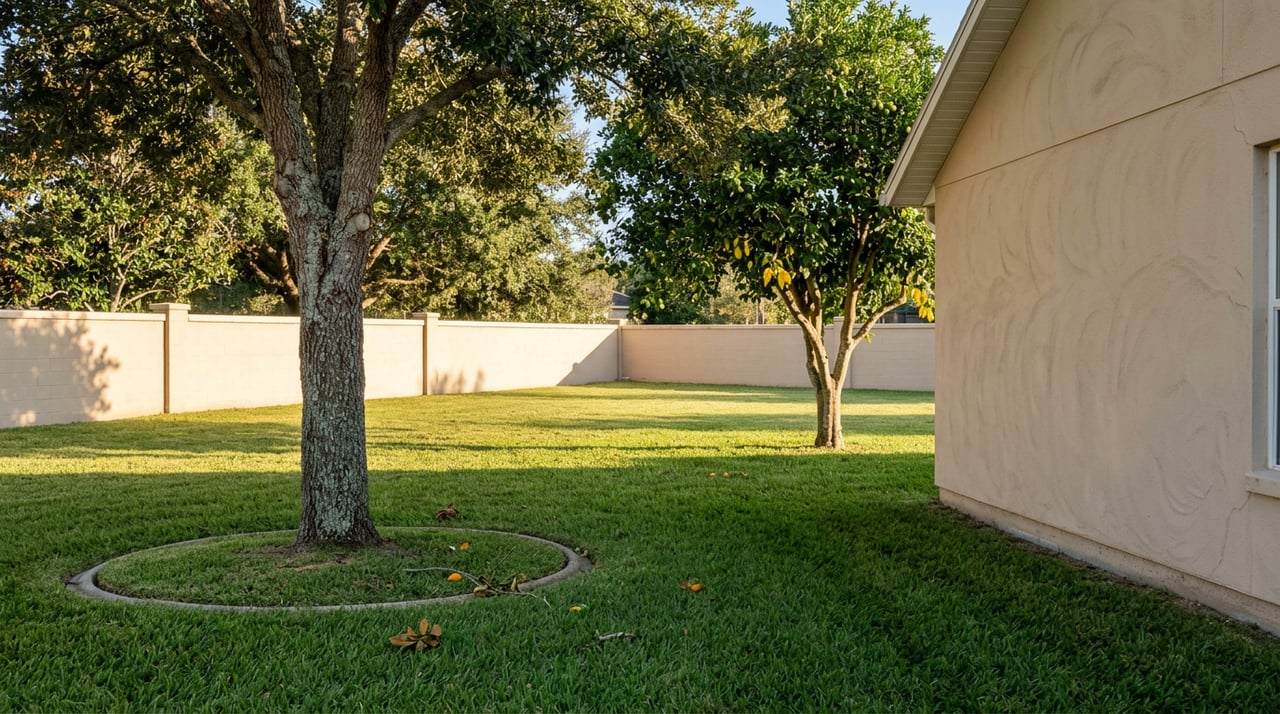
Scroll through active listings in Litchfield Park right now and you will keep running into the same phrase tucked between the granite countertops and the RV garage: Flood Irrigation. It shows up on equestrian estates with acre-plus lots. It shows up on custom homes with pools and expansive grass. Sellers list it the way they list solar panels, as a perk, a line item that signals lush landscaping and lower water bills.
That framing is not wrong. It is just incomplete. Flood irrigation is a real financial advantage tied to land that has held water rights for more than a century, and it also comes with a set of obligations that never make it onto a listing sheet. If you are shopping for one of these lots, the gap between what the marketing implies and what you actually inherit is worth understanding before you write an offer, not after you close.
Where the Water Actually Comes From
Salt River Project runs the system that makes flood irrigation possible in Litchfield Park and across much of the West Valley. Water moves from the Salt and Verde rivers through SRP's canals, then through smaller channels called laterals, and eventually to a delivery gate at the edge of a neighborhood. From there, the responsibility shifts. SRP employees called zanjeros, Spanish for ditch riders, control the gates and direct water to the high point of a neighborhood on a set schedule. Once the water passes through that gate, the private neighborhood system takes over, and that system belongs to the homeowners it serves, not to SRP.
Delivery is not on demand. SRP schedules residential deliveries roughly every 14 days during the warmer months, April through September, and about every 28 days in the cooler months, with no deliveries during the annual canal maintenance window. A flood-irrigated yard gets filled with two to three inches of water on that cycle, which soaks deep into the soil and grows the kind of mature shade trees you see anchoring older Litchfield Park lots.
The History That Makes the Water Cheap
The reason this water costs so little traces back to Roosevelt Dam. Early Valley farmers and ranchers pledged roughly 200,000 acres of land as collateral to secure the federal loan that built the dam, and each acre pledged became one share in what is now Salt River Project. Those shares are tied to the land itself, not to whoever happens to own it, and they transfer automatically when the property changes hands. That is the entire reason a modern buyer can inherit flood irrigation rights on a Litchfield Park lot without applying for anything. The right was already attached to the dirt.
Only a small share of eligible land still uses it. Across SRP's full service territory, roughly 22,000 homeowners take flood irrigation today, about 5 percent of the land that carries the right. Everyone else switched to municipal water, and their allotment now flows to city treatment systems instead. The water that still moves through open ditches is untreated, delivered by gravity, and priced far below what it costs a city to treat, pump, and meter drinking water. That is the entire economic case for keeping it.
The Part the Listing Sheet Leaves Out
Here is the piece that turns a marketing perk into a practical decision. The ditches that carry water from the SRP gate to your yard are private property, maintained by the homeowners who use them, not by SRP. Someone has to open and close the gate at the scheduled time, which sometimes means the middle of the night. Someone has to keep the ditch clear and functional. In neighborhoods where owners have not organized around this, aging ditches degrade and flood irrigation becomes more trouble than the savings are worth, which is exactly why some Valley neighborhoods have quietly abandoned it altogether.
Neighborhoods that want to keep the system running often form an Irrigation Water Delivery District, a special taxing district authorized under Arizona law specifically for this purpose. Forming one takes a vote of 50 percent plus one of the homeowners inside a proposed boundary, and once established, the district collects funds through Maricopa County property tax assessments to cover repair and maintenance. SRP's own example from 2022 put the average annual cost for a quarter-acre property inside one of these districts at about $61. Cost scales with acreage and with whatever budget the district sets, so a one-acre equestrian lot in an active IWDD will carry a proportionally larger bill than a quarter-acre parcel, even though the underlying water itself stays cheap.
If gate duty and ditch upkeep are not something you want to manage yourself, third-party delivery services exist for exactly this reason. Arizona Residential Irrigation Delivery Service, which operates in the Phoenix area, handles the ordering and gate work for homeowners who would rather pay a flat service fee than track a delivery schedule at 2 a.m. That option is worth knowing about if flood irrigation is appealing for the landscaping but not for the logistics.
There is one more practical wrinkle worth flagging if the home has a septic system, which is common on the larger, older lots where flood irrigation shows up most often. Saturating the ground on a regular cycle can leave a septic drain field waterlogged longer than it should be, and a drain field that stays soaked can lose its ability to absorb wastewater properly. It is a question worth raising with an inspector on any flood-irrigated lot that also runs on septic.
The Paperwork Sellers Sometimes Forget
Some of these water rights carry an extra layer of documentation. Land with an established water right predating 1980 was recognized as grandfathered under the 1982 Groundwater Management Act, and owners of that land receive annual reporting forms from the Arizona Department of Water Resources along with water-use letters from SRP. If a property with grandfathered rights sells, the seller is expected to notify ADWR directly. It is a small administrative step, easy to miss for an out-of-state seller or a first-time seller, and worth confirming has happened before you close if the property you are buying carries this kind of right.
Where This Actually Shows Up in Litchfield Park's Market
Flood irrigation is not evenly distributed across Litchfield Park's price range. It clusters on the larger, acreage-driven properties, the equestrian estates and custom cul-de-sac lots that sit above the city's typical footprint. That matters for context. Redfin's data covering the three months ending May 2026 put Litchfield Park's median sale price at $600,000, down 4.5 percent from the same period a year earlier, with homes averaging 66 days on market. Separate August 2026 figures from other aggregators placed the citywide median closer to $560,000 to $565,000, a gap that likely reflects listing price versus closed price rather than a real disagreement about direction. Either way, the flood-irrigated lots we see marketed tend to sit above that citywide median, which tells you something useful: this is largely a feature of the upper tier of Litchfield Park's market, not a citywide norm.
What to Ask Before You Write an Offer
If a flood-irrigated lot is on your shortlist, a few questions are worth answering before you get to the inspection period. Ask whether the neighborhood has an active Irrigation Water Delivery District and what the current annual assessment runs. Ask who has been handling gate duty, the seller personally or a third-party service, and what that arrangement costs. If the lot has a septic system, ask your inspector to look specifically at drain field condition given the irrigation cycle. Our team includes two licensed contractors who walk properties like this with us, and a private ditch system is exactly the kind of infrastructure worth having a second set of experienced eyes on before you are the one responsible for it.
FAQ
Can a flood-irrigated lot switch to city water instead? Homeowners on SRP lands generally have the option to decline flood irrigation delivery and rely on municipal water instead, which is the path most eligible land in the Valley has already taken. Confirm the specific arrangement and any required steps with SRP directly before assuming a switch is automatic.
Does flood irrigation affect homeowners insurance? Flood irrigation is a controlled, scheduled application of water to soil, not the kind of flood event that homeowners insurance or flood zone designations typically address. It is worth asking your insurer directly if you have questions specific to a property you are considering.
Is the IWDD assessment separate from an HOA fee? Yes. An Irrigation Water Delivery District is a Maricopa County special taxing district focused solely on irrigation system upkeep, distinct from any homeowners association fee the neighborhood might also carry. Ask for both figures separately when you are budgeting.
If you are weighing a flood-irrigated lot in Litchfield Park against a more conventional property, The Reyes Team can walk the numbers and the infrastructure with you before you write an offer. We know this water system because we work in these neighborhoods, and we bring in-house contractor expertise to every walkthrough so you understand exactly what you are taking on, not just what you are being sold.