A new banner goes up along Sun Valley Parkway or Verrado Way, and a Buckeye homeowner two miles away starts recalculating their asking price. The instinct makes sense. A builder with a fresh model home and a marketing budget looks like the obvious threat. But the sticker price on that model home is not what is actually pulling buyers away from resale listings. The mechanism doing the real work is buried in the financing structure and the tax bill, and it rarely shows up until a buyer is deep into a builder contract or a resale closing.
If you own a resale home in Buckeye right now, understanding that mechanism, not just the headline price gap, is what determines whether your listing competes or sits.
The Real Comparison Isn't the Sticker Price
Builders across Buckeye's master-planned communities are leaning on mortgage rate buydowns and design credits to move inventory, the same tools production builders have used nationally through 2025 and 2026 to offset higher rates without cutting their base price. A 2-1 buydown, closing cost credit, or design center allowance can look like tens of thousands of dollars in buyer savings, and on paper it often is.
What gets lost in that comparison is the string attached. Builder incentives are typically tied to the builder's own affiliated lender. A buyer who wants the full incentive package generally has to finance through that lender, which means giving up the ability to shop rates freely. The incentive lowers a payment. It does not lower the price of the home, and it does not follow the buyer if they refinance with an outside lender later. A resale seller who understands this can make a genuinely different argument to a buyer: an unrestricted loan, no preferred-lender strings, and a price that reflects the home as it sits today.
What the Current Numbers Actually Mean
As of June 2026, the median single-family resale price across Buckeye sat near $398,000, down roughly 2 percent from a year earlier, with price per square foot around $221. Active inventory had climbed to about 1,750 listings citywide, homes were averaging close to 80 days on market, and months of supply had expanded to roughly 7.5, a level that puts the market solidly in buyer-favorable territory.
None of that means resale homes are struggling to sell. Sale-to-list ratios were running close to 97.8 percent, meaning homes priced to the current market were closing within a couple of percentage points of asking. The softness in the data is not a demand problem. It is a supply and comparison problem. Buyers have more product to choose from, most of it new, and they are pricing your home against that product whether you invite the comparison or not.
The Development That Is About to Add More Competition
Buckeye's largest master plan just opened its first neighborhood. Teravalis, the roughly 37,000-acre project on the site of the former Douglas Ranch, more than four times the size of Verrado's 8,800 acres, brought its first village, Floreo, online with six builders active on site: Brightland Homes, Century Communities, Courtland Communities, KB Home, Lennar, and New Home Co. First residents are expected to move in late 2026.
For a resale seller, this matters less because of direct overlap in any single neighborhood and more because of what it signals about supply direction. Buckeye already carries one of the highest concentrations of active master-planned communities in the state, and Teravalis adds another large pipeline of new product entering the market over the next several years. If you are planning to sell in the next year or two, the competitive set you are pricing against today is not the ceiling. It is closer to the floor.
The Line Item the Builder's Sign Won't Mention
Here is the part of the comparison that most sellers, and most buyers touring model homes, never see clearly laid out: many of Buckeye's most active new-construction communities carry Community Facilities District, or CFD, assessments. Verrado, Sundance, and Festival Ranch are among the master plans with CFD overlays, and those assessments can add roughly $1,000 to $3,000 per year to a homeowner's property tax bill on top of the standard Maricopa County rate. CFDs are used to finance infrastructure like roads, parks, and water systems inside a new master plan, and the bond gets repaid through that annual assessment, often for decades.
A resale home in an older, already-built-out Buckeye neighborhood frequently carries no CFD at all. That is a real, recurring dollar difference that a rate buydown does nothing to offset.
A builder's rate buydown lowers a monthly payment for a year or two. A CFD assessment runs with the land for the life of the bond. Buyers comparing "the same monthly payment" across a resale home and a new build are rarely comparing the same total cost of ownership.
| Established Resale Neighborhood | New-Build Community with CFD Overlay | |
|---|---|---|
| Annual property tax | Standard Maricopa County rate | Standard rate plus CFD assessment (~$1,000-$3,000/year) |
| Backyard condition at close | Typically finished (landscaping, patio) | Typically bare dirt, buyer finishes at own cost |
| Financing flexibility | Buyer's choice of any lender | Often tied to builder's preferred lender for full incentive |
| Move-in timeline | Commonly around 30 days | Often several months if not already complete |
What a Finished Backyard Is Actually Worth at Closing
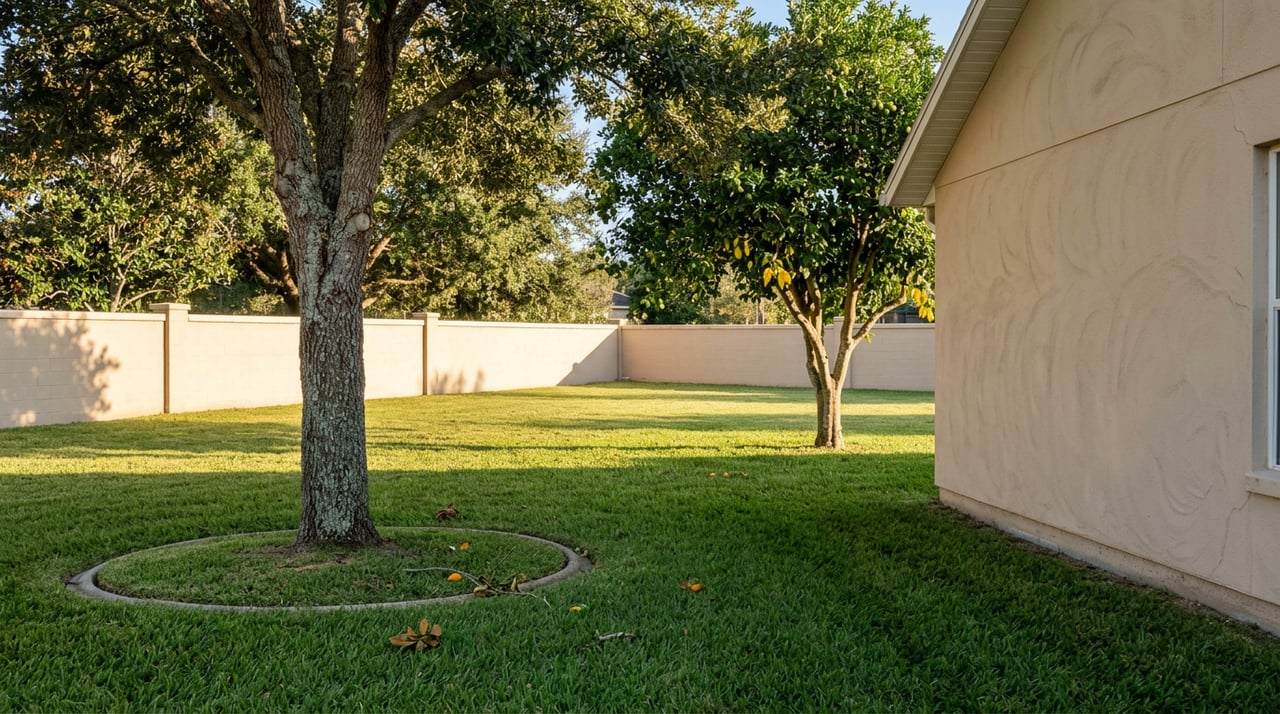
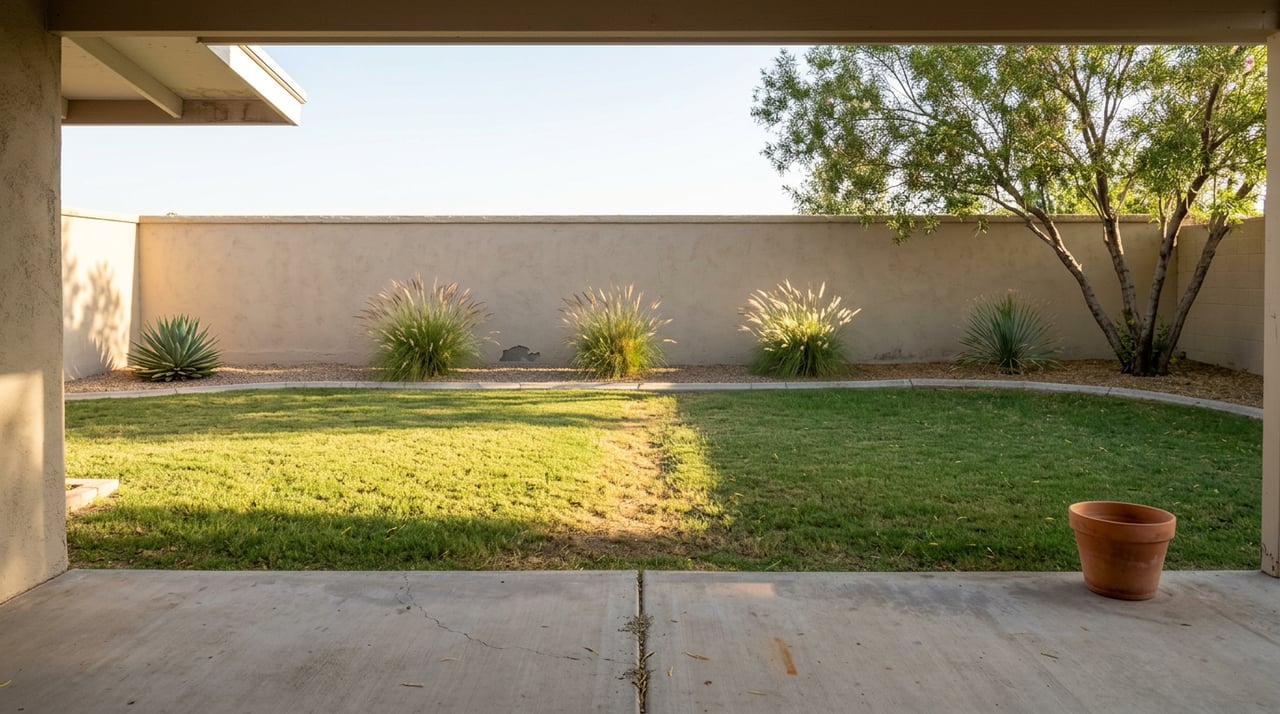
New-construction homes in Buckeye typically hand the buyer a bare dirt backyard, with landscaping, window coverings, and often a finished patio left as buyer-funded add-ons after closing. If your resale home already has a finished yard, that is not a soft selling point. It is a dollar figure.
Artificial turf installation across the Phoenix metro currently runs roughly $8 to $20 per square foot installed, depending on turf grade and base prep. A full kid-friendly backyard buildout with turf, a paver border, and basic irrigation commonly falls between $12,000 and $28,000. A more finished outdoor living space with pavers, lighting, and a fire feature can run $25,000 to $60,000 or more. If your backyard already includes any of that, you are handing a buyer real, quantifiable value the day they get keys, not a project to schedule and finance on top of their mortgage.
Window coverings tell the same story on a smaller scale. Blinds and shutters are rarely included in new construction and add real cost after move-in. A finished, move-in-ready resale home skips that entire line item.
Timeline matters too. Most resale closings in Buckeye happen within about 30 days of an accepted offer, while a new build not yet complete can take months to close. For a buyer on a lease deadline or a job start date, that difference is not abstract.
Three Moves That Actually Change the Comparison
- Pull your CFD and HOA status before you price the home. If your neighborhood has no CFD, that is a comparison point worth stating plainly in your listing, not assuming buyers will discover on their own.
- Price to the June 2026 comp set, not the comps from two or three years ago. With months of supply near 7.5 and days on market near 80, homes anchored to 2022-era pricing are the ones sitting past 100 days.
- Put a dollar figure on your finished features. Rather than listing "beautifully landscaped backyard" as a generic bullet, note the approximate cost of what is already installed. Buyers doing real math respond to real numbers.
FAQ
What is a CFD, and how do I find out if my Buckeye home has one? A Community Facilities District is a special taxing district that finances infrastructure inside a master-planned community and repays the bond through an annual assessment on top of standard property taxes. Your county tax statement will show it as a separate line item, and your title company or the HOA disclosure packet can confirm whether your subdivision carries one.
Is a builder's rate buydown actually a better deal than a price cut on a resale home? It depends on how long the buyer plans to stay and whether they use the builder's preferred lender. A temporary buydown lowers payments for a year or two before reverting to the full rate, and it typically requires financing through the builder's affiliated lender to get the full value. A price reduction on a resale home lowers the loan amount permanently and leaves the buyer free to shop any lender they choose.
How long does it typically take to sell a resale home in Buckeye right now? As of June 2026, resale homes across Buckeye were averaging close to 80 days on market citywide, though homes priced to current conditions were closing near 97.8 percent of asking price. Pricing discipline from day one matters more than it did two years ago.
Selling in a Market Full of Model Homes Takes More Than a Sign in the Yard
Competing with a builder's marketing budget is not really the fight. The fight is making sure a buyer understands the full cost of what they are comparing, the financing strings, the tax overlay, the finished yard they would otherwise pay for out of pocket. That takes someone who can read a CFD disclosure, price against the actual June 2026 comp set, and put a real number on what your landscaping is worth at the table.
The Reyes Team works Buckeye listings with two licensed contractors on staff, bilingual service in English and Spanish, and a negotiation-first approach built for exactly this kind of comparison. If you're weighing whether to list your Buckeye home against the new construction down the street, reach out and let's map out what your home is actually worth against it.